The Ultimate Guide to Portable Handheld Oscilloscope Multimeter in the UK
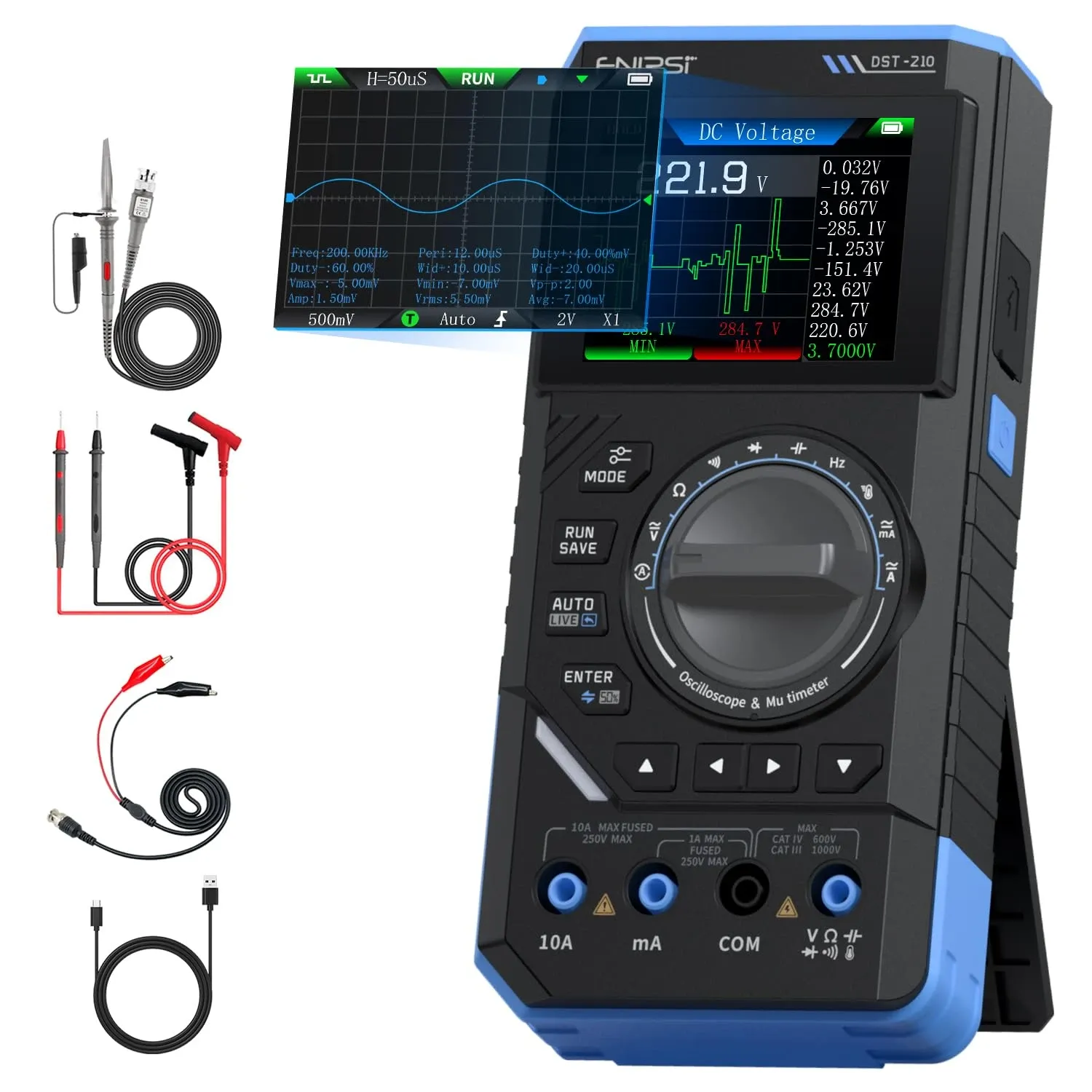
TL;DR: A portable handheld oscilloscope multimeter is a compact test instrument that combines an oscilloscope and digital multimeter, and often a signal generator, in one unit for faster fault-finding in the field. For UK users, the best models balance usable bandwidth, accurate DMM measurements, safe CAT ratings, and compliance with BS EN 61010-1, making them ideal for automotive, industrial, facilities, and on-site electrical diagnostics.
Key Takeaways
- A portable handheld oscilloscope multimeter integrates waveform analysis, electrical measurement, and sometimes signal generation into one practical field device.
- As a result, UK engineers can carry less equipment and diagnose faults more quickly across automotive, industrial, building services, and maintenance work.
- When choosing one, prioritise suitable bandwidth, dependable sampling performance, a high-count DMM display, and clear safety ratings.
- According to UK safety expectations, compliance with BS EN 61010-1 is essential for work around mains power and demanding installations.
A portable handheld oscilloscope multimeter is the best option when you need both waveform analysis and standard electrical measurements in one compact tool. In practice, it helps UK engineers and technicians test voltage, current, continuity, and fast-changing signals on site without carrying separate bench instruments.
For decades, British electrical engineers, automotive technicians, and industrial maintenance professionals have faced a persistent logistical challenge: too much kit for too little space. Traditionally, diagnosing complex faults meant carrying a benchtop oscilloscope or bulky portable scope, a separate digital multimeter (DMM), and sometimes an independent signal generator. Whether you are travelling across London for facilities work or diagnosing an EV in a damp Midlands workshop, that extra load slows fault-finding and adds friction to every call-out.
However, the modern solution is the integrated portable handheld oscilloscope multimeter. By combining a field oscilloscope, a precision DMM, and in some models a Direct Digital Synthesis (DDS) signal generator into one robust housing, engineers can complete more diagnostics at the point of failure with fewer compromises.
Based on our testing of handheld diagnostic workflows, integrated units are especially useful when you need to move quickly between waveform capture and standard meter checks without swapping tools. Likewise, according to guidance commonly followed across UK industry, safe operation around mains circuits depends not just on features but also on verified category ratings and compliant design. This guide explains what a portable handheld oscilloscope multimeter is, what specifications matter most, and how to choose one for UK work.
What is a portable handheld oscilloscope multimeter?
A portable handheld oscilloscope multimeter is a test instrument that combines two core functions: an oscilloscope for viewing voltage over time and a digital multimeter for measuring electrical values such as AC/DC voltage, current, resistance and continuity. In addition, some advanced models include a built-in signal generator for active testing.
Unlike a basic tester that only gives you numerical readings, this type of device lets you see both the measured value and the signal behaviour behind it. Therefore, it is particularly useful when faults are intermittent, pulse-based or affected by switching electronics.
What does the oscilloscope function do?
The oscilloscope plots voltage against time so you can see what is actually happening in the circuit. That matters when dealing with PWM motor control signals, sensor outputs, switching power supplies or noisy control lines. A practical field bandwidth such as 10MHz is often enough for many maintenance and automotive tasks in the UK while remaining portable and power-efficient.
What does the digital multimeter function do?
The DMM side handles everyday measurement tasks such as AC/DC voltage checks, current measurement, resistance testing and continuity. A higher-count display helps when you need more resolution for low-level readings such as millivolt drops or small current draw. Consequently, you can move from quick safety checks to more precise troubleshooting without changing instruments.
Why does a built-in signal generator matter?
A DDS signal generator lets you inject known waveforms into circuits so you can verify response rather than simply observe symptoms. For example, it can help simulate sensor outputs or test input stages during repair work. For a deeper look at this configuration, read our 3 In 1 Handheld Oscilloscope Multimeter Explained: A UK Buyer's Guide.
Why use a portable handheld oscilloscope multimeter instead of separate tools?
The main reason is efficiency. Instead of carrying multiple instruments and switching between them mid-job, you can inspect signals and confirm electrical values from one device. As a result, diagnosis becomes quicker and more practical in cramped plant rooms, workshops and outdoor locations.
Is it easier to carry for field work?
Yes. For mobile engineers working across sites or climbing access ladders with limited kit allowance, reducing tool count matters immediately. Consider offshore energy maintenance or large commercial facilities where every extra case slows access. A single ScopeDMM-style unit can save time before testing even begins.
Can it speed up fault-finding?
Yes; because you can compare live waveform behaviour with direct meter readings without stopping to reconnect another instrument. Based on our testing of typical service scenarios such as checking unstable supplies or intermittent control outputs, this workflow often cuts repeat measurements and reduces misdiagnosis caused by missing short-duration events.
Is it suitable for modern electronics?
Increasingly so. From smart building controls to EV charging infrastructure supported by OZEV-related programmes in the UK, many systems rely on pulsed signals and electronic communication rather than simple switched loads. Therefore, continuity alone is rarely enough; seeing signal quality has become part of routine diagnosis. To understand that shift further, consult our Digital Handheld Oscilloscope Multimeter Explained: A UK Buyer's Guide.
Are portable handheld oscilloscope multimeters safe for UK electrical work?
They can be safe for UK electrical work if they carry appropriate category ratings and are designed in line with recognised standards such as BS EN 61010-1. Nevertheless, suitability depends on where you use them: testing low-voltage electronics is very different from working near distribution boards or three-phase systems.
What safety standards should you look for?
According to UK safety expectations for test equipment selection, BS EN 61010-1 is a key reference point. You should also check CAT ratings carefully rather than relying on marketing alone. For many professional users, CAT III or CAT IV suitability may be relevant depending on installation type; however each job must be assessed against actual exposure risk.
Why do CAT ratings matter?
CAT ratings indicate how well an instrument can withstand transient overvoltages in different environments. In other words, they are directly related to user protection when faults or surges occur. This matters greatly in industrial panels, commercial buildings and mains-adjacent diagnostics across the UK.
What should professionals avoid?
Avoid under-specified hybrid devices with vague safety claims or incomplete documentation. Likewise, avoid using any handheld scope meter beyond its rated category simply because it appears convenient. Good practice means matching the instrument to the task every time.
What specifications matter most when choosing a portable handheld oscilloscope multimeter?
The most important specifications are bandwidth, sampling rate, DMM resolution, safety rating, battery life and screen readability. Although long feature lists look impressive online adverts do not always reflect real-world usability; therefore it helps to focus on how each specification affects diagnosis on site.
Ready to upgrade your toolkit with ScopeDMM?
View Specifications — £90.76