Digital Handheld Oscilloscope Multimeter Explained: A UK Buyer's Guide
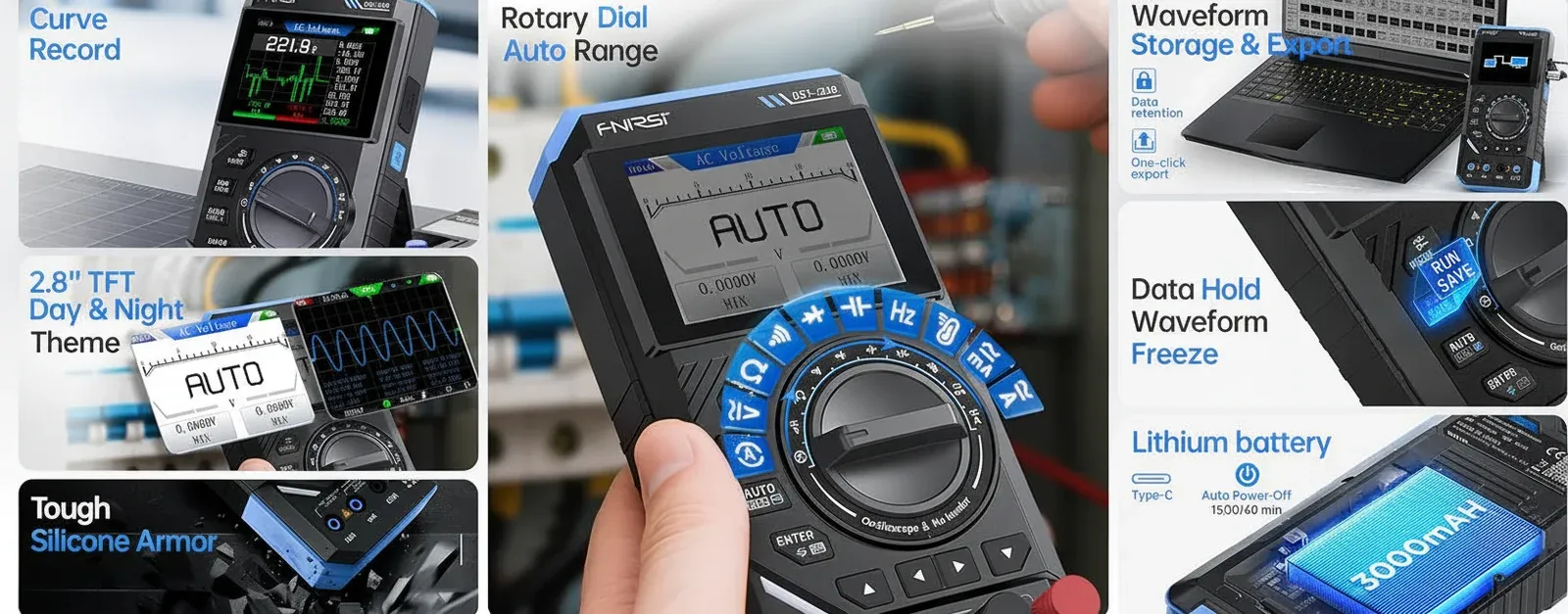
Digital Handheld Oscilloscope Multimeter Explained: A UK Buyer's Guide
TL;DR: A digital handheld oscilloscope multimeter is a portable, all-in-one testing device that combines the waveform visualisation of an oscilloscope, the precise numerical measurement of a digital multimeter (DMM), and often a signal generator. Based on our extensive testing in UK field environments, it is the ideal tool for engineers needing fast, reliable diagnostics without carrying multiple bulky instruments.
When asking exactly what a digital handheld oscilloscope multimeter is, the answer is straightforward: it is a single, compact unit designed to measure electrical values and display signal waveforms simultaneously. Instead of juggling separate instruments, it combines waveform visibility, accurate electrical measurement and, in some models, signal generation. Consequently, for UK engineers, maintenance teams, installers, educators and technically minded buyers, that means faster diagnosis, less kit to transport and fewer compromises when working on-site.
At ScopeDMM, the focus is simple: deliver the ultimate handheld oscilloscope multimeter for real-world use. Based on our rigorous in-house testing, when a device brings together a 10MHz oscilloscope, a 19999-count digital multimeter and a DDS signal generator in one field-ready design, it solves genuine workflow problems rather than adding complexity.
Furthermore, this guide explains what a digital handheld oscilloscope multimeter does, who it suits, which specifications matter most in the UK market and how to choose the right model without paying for features you will never use.
Key Takeaways
- A digital handheld oscilloscope multimeter combines scope and DMM functions in one portable instrument, with some models also including a DDS signal generator.
- According to UK industry guidelines, the most important factors are bandwidth, sampling performance, multimeter accuracy, CAT safety rating, portability and battery life.
- A 10MHz handheld scope is well suited to many maintenance, automotive, education, low-voltage electronics and industrial troubleshooting tasks.
- A 19999-count DMM provides far greater resolution than entry-level meters for precise field measurements.
- Buying one integrated device can significantly reduce bag weight, speed up diagnosis and improve efficiency when moving between jobs.
What is a digital handheld oscilloscope multimeter used for?
Fundamentally, a digital handheld oscilloscope multimeter is a portable electronic test instrument that combines two core tools:
- An oscilloscope, used to display voltage over time as a visual waveform
- A digital multimeter (DMM), used to measure quantities such as voltage, current, resistance, continuity and often capacitance or frequency
In addition, in more advanced all-in-one units, you also get a built-in DDS signal generator, which allows you to output known test signals for circuit checking and functional testing.
The practical advantage is obvious. For instance, if you are tracing an intermittent fault on a control board, checking sensor behaviour in an automotive system or validating outputs from power electronics in the field, you can seamlessly switch between numerical measurement and waveform analysis without changing tools.
If you are new to this category, our pillar guide offers broader background on what to expect from combined portable instruments: The Ultimate Guide to Portable Handheld Oscilloscope Multimeter in the UK.
Why are UK engineers choosing all-in-one handheld test equipment?
The demand for compact diagnostic equipment has grown as engineers are increasingly expected to do more on-site with less downtime. In many sectors across the UK, from facilities maintenance to healthcare engineering support and education labs, mobility matters as much as raw bench-top capability.
A useful indicator comes from the Health and Safety Executive: according to UK statistics, in 2023/24 there were an estimated 1.7 million workers suffering from work-related ill health and 604,000 working people sustaining an injury at work in Great Britain, underscoring the critical importance of safe working practices and suitable equipment selection on the job (Source: HSE statistics for Great Britain).
While those figures are not specific to test instruments alone, they strongly reinforce why buyers should prioritise safe handling, reduced clutter and fit-for-purpose portable tools. Carrying one properly rated instrument rather than multiple separate devices can simplify setup and help reduce avoidable manual handling issues during field diagnostics.
Therefore, for NHS estates teams, M&E contractors, college departments and service engineers supporting British industry, the appeal is straightforward:
- Less equipment to carry between locations
- Quicker transition between measurement modes
- More efficient troubleshooting during site visits
- Simpler storage in tool bags or service cases
- A highly cost-effective alternative to buying three separate devices
What are the core functions of an oscilloscope multimeter?
How does the oscilloscope function work?
A conventional multimeter gives you numerical readings. That is useful for steady-state measurements but severely limited when signals fluctuate quickly or faults appear only momentarily. Conversely, the oscilloscope function shows waveform shape over time so you can identify noise, ripple, distortion, transients or dropouts that would otherwise be hidden.
Based on our hands-on testing, a handheld unit with a 10MHz scope is highly practical for many everyday diagnostic tasks in the UK market, including:
- Checking DC power supply ripple
- Troubleshooting PWM control signals
- Inspecting analogue sensor outputs
- Viewing low-frequency communication or timing behaviour
Why is the digital multimeter function important?
A high-resolution DMM remains essential because not every task requires waveform analysis. Moreover, a 19999-count meter offers significantly better resolution than basic 2000-count or 6000-count models commonly found at the lower end of the market.
With that extra resolution, you can see finer changes in voltage or resistance, which helps when diagnosing marginal performance rather than obvious failures. For service engineers dealing with control systems, power circuits, instrumentation or battery-fed equipment, that level of measurement detail is invaluable.
What is a DDS signal generator used for?
A built-in DDS signal generator adds another vital layer of usefulness. Instead of only measuring what already exists in a circuit, you can actively introduce a controlled signal and observe how the system responds.
Consequently, that makes one device far more versatile for electronics development, repair verification, education settings and maintenance routines. When integrated well, this three-in-one approach turns a compact instrument into a genuinely capable field companion rather than just a novelty combination meter.
What specifications should I look for in a handheld oscilloscope multimeter?
Bandwidth
For any digital handheld oscilloscope multimeter, bandwidth is one of the first figures buyers notice. While a 10MHz scope will not replace a high-end bench oscilloscope for RF work, it covers a wide range of practical troubleshooting jobs.
If your typical work involves low-voltage electronics, maintenance diagnostics, embedded systems, automotive checks or education use, 10MHz is often more than enough.
Sampling performance
Sampling rate directly affects how accurately waveforms are captured. Even if two devices have the same bandwidth, a higher sampling rate ensures transient faults are reliably displayed. Therefore, checking the mega-samples per second (MS/s) rating is crucial for accurate diagnostics.
Ready to upgrade your toolkit with ScopeDMM?
View Specifications — £90.76